
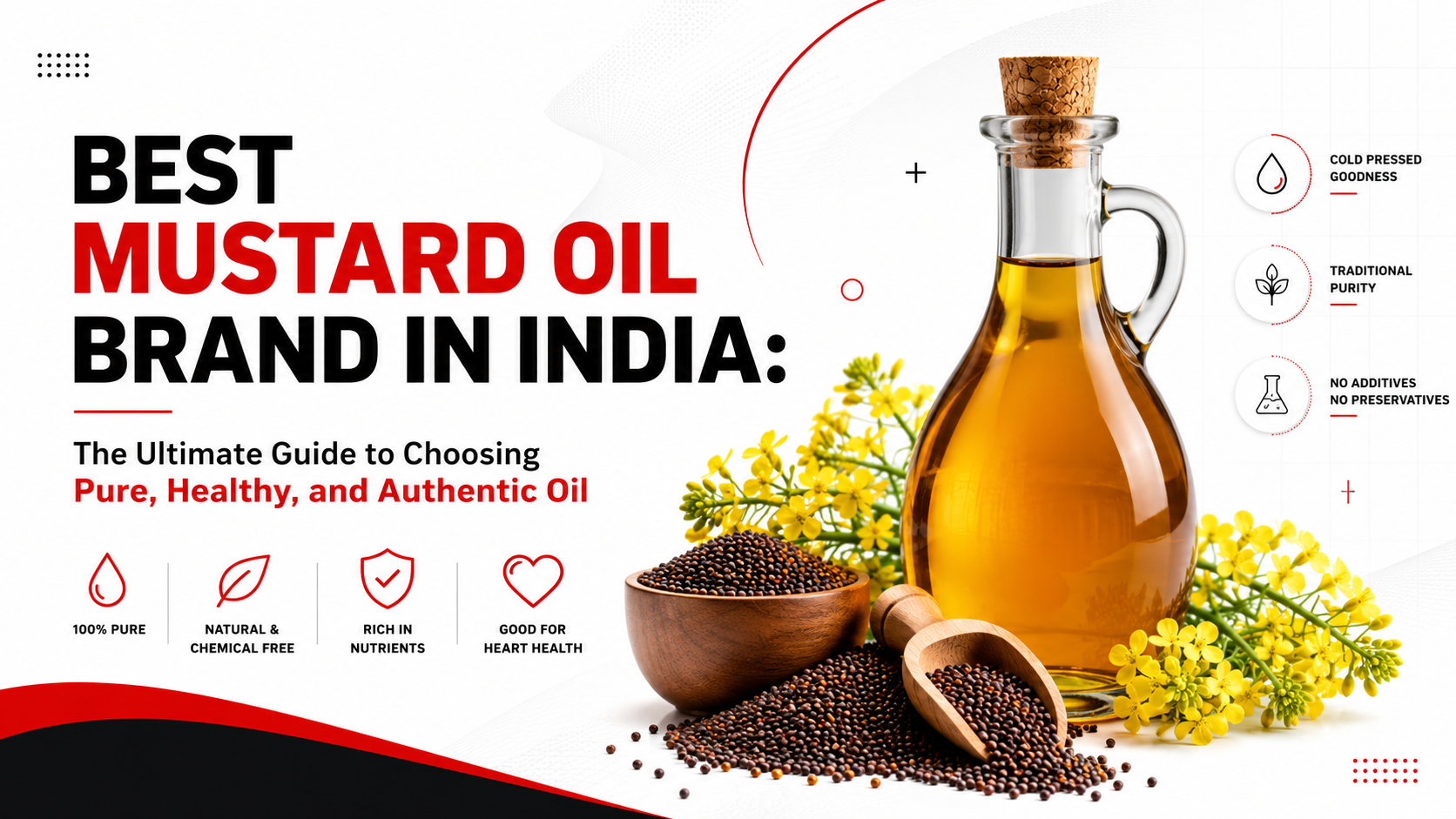
Did you know that India is the third-largest producer of mustard oil in the world, yet millions of Indian households are unknowingly using adulterated or low-quality oil that strips away the very health benefits they are paying for? If you have ever stood in a grocery aisle staring at a dozen identical-looking yellow bottles, wondering which one is actually worth your money, you are not alone. Choosing the best mustard oil brand in India is not just a kitchen decision — it is a health decision, a family decision, and for many, a deeply cultural one.
Mustard oil has been the backbone of Indian cooking for thousands of years. From the smoky tadkas of Bengal to the robust marinades of Punjab, this pungent golden oil carries history, flavor, and nutrition in every drop. It is rich in monounsaturated fatty acids, omega-3 and omega-6 fatty acids, and natural antioxidants that support heart health, improve digestion, and strengthen immunity. And yet, not all mustard oils are created equal. The quality of extraction, the purity of the seeds, the absence of blending — these factors vary dramatically from one brand to the next.
This comprehensive guide is designed to help you navigate the crowded mustard oil market in India with clarity and confidence. We have researched the most trusted names, analyzed what makes each one stand out, and laid out everything you need to make the right choice for your home. Whether you are a health-conscious urban consumer or someone looking to bring back the authentic taste of traditional cooking, this guide on the best mustard oil brand in India has you covered.
What Makes a Mustard Oil Truly the Best?
Before diving into the brands themselves, it is important to understand what separates a premium mustard oil from an ordinary one. The extraction method is the single most important factor. Cold-pressed or Kachi Ghani mustard oil is extracted at low temperatures without the use of heat or chemicals, which preserves the natural pungency, nutrients, and medicinal compounds of the mustard seed. Hot-pressed or expeller-pressed oils, on the other hand, undergo high-temperature processing that significantly reduces nutritional value.
Purity is the next critical factor. The best mustard oil in India is 100% pure, without blending with cheaper refined oils like palm oil, sunflower oil, or soybean oil. Adulteration is unfortunately common in the unbranded and semi-branded mustard oil market, which makes buying from FSSAI-certified, well-established brands all the more important. The Food Safety and Standards Authority of India regulates mustard oil standards, but enforcement varies, making brand reputation your most reliable filter.
The aroma and color of mustard oil also speak volumes about its quality. Authentic cold-pressed mustard oil has a sharp, pungent smell — the kind that makes your nose tingle — and a deep amber-yellow color. If a mustard oil looks pale or has a mild smell, it has likely been over-processed or diluted. The presence of allyl isothiocyanate, the natural compound responsible for that characteristic bite, is what gives genuine mustard oil its flavor and much of its antimicrobial and anti-inflammatory power.
The Top Mustard Oil Brands in India You Can Trust
1. Patanjali Kachi Ghani Mustard Oil
Patanjali has built one of the most recognizable and trusted names in the Indian consumer goods space, and its Kachi Ghani Mustard Oil lives up to that reputation. Extracted using the traditional cold-press method, this oil retains the natural pungency and deep golden color that are the hallmarks of authentic mustard oil. Baba Ramdev’s brand emphasizes natural, chemical-free production, and this oil is FSSAI-certified with no added preservatives or artificial flavoring.
One of the biggest advantages of Patanjali Mustard Oil is its widespread availability. You can find it in Patanjali stores, major supermarkets, and online platforms like Amazon and Flipkart across the country. The price point is also highly competitive, making it accessible to a broad section of the Indian population. For families looking for a reliable, affordable, and genuinely cold-pressed option, Patanjali is a consistently strong choice.
The oil performs exceptionally well in high-heat cooking, which is typical for Indian kitchens. It has a high smoke point and gives dishes that characteristic mustard sharpness that many regional cuisines depend on. Whether you are frying fish in a Bengali household or preparing achar in a Rajasthani one, Patanjali’s mustard oil delivers both taste and health in one bottle.
2. Dabur Hommade Mustard Oil
Dabur is a name synonymous with trust and Ayurvedic heritage in India, and their Hommade Mustard Oil is a strong contender for the best mustard oil brand in India. Dabur’s mustard oil is sourced from quality mustard seeds and processed under strict quality control norms that are consistent with the brand’s century-old commitment to health and purity. The oil is available in multiple pack sizes, catering to individual users as well as large families.
What sets Dabur Hommade Mustard Oil apart is its emphasis on delivering the authentic Rajasthani mustard flavor, which is considered among the most robust and aromatic in the country. Rajasthani mustard seeds are known for their stronger pungency and higher oil content, and Dabur sources carefully to ensure that this regional quality is consistently reflected in the final product. The result is a mustard oil that does not compromise on taste or nutrition.
Dabur’s distribution network is one of the strongest in India, ensuring that their mustard oil is available from small kirana stores in rural areas to premium supermarkets in metropolitan cities. The brand also actively promotes quality testing and transparency, publishing nutritional information clearly on their packaging. For consumers who prioritize a well-established brand with a long track record, Dabur is an excellent choice.
Fortune Mustard Oil: The Market Leader by Volume
Fortune, a brand under the Adani Wilmar umbrella, is arguably the most widely consumed edible oil brand in India by sheer volume. Fortune Kachi Ghani Mustard Oil has earned a loyal following across Indian households, particularly in North India and Bengal, where mustard oil consumption is highest. The brand’s enormous scale allows it to maintain consistent quality across millions of units produced monthly, a feat that smaller brands often struggle to achieve.
Fortune Mustard Oil is cold-pressed and available in both filtered and unfiltered variants. The filtered version has a cleaner appearance and longer shelf life, while the unfiltered version retains more of the natural compounds and is preferred by purists who want the maximum nutritional and sensory benefit. Both variants are FSSAI-approved and undergo rigorous quality testing before hitting store shelves.
The brand’s pricing strategy is designed to make quality mustard oil accessible to middle-income households, which makes up the majority of Indian mustard oil consumers. Fortune also offers its mustard oil in a wide range of pack sizes — from small 500ml pouches ideal for trials or small households to large 15-liter tins preferred by restaurants and catering businesses. This versatility, combined with near-universal availability, makes Fortune one of the smartest choices when you are seeking the best mustard oil brand in India.
P Mark: The Benchmark for Kachi Ghani Purity
Among connoisseurs of traditional mustard oil, the name P Mark occupies a special place. Produced by Pilibhit Mustard Oil Company, P Mark Mustard Oil is one of the oldest and most respected brands in the Indian market, with a heritage that stretches back several decades. It is widely regarded as the gold standard for Kachi Ghani mustard oil, particularly in Uttar Pradesh, Bihar, and neighboring states where mustard oil is a daily kitchen staple.
P Mark Mustard Oil is extracted exclusively through the cold-press method without any chemical solvents or heat treatment. The brand maintains strict seed-sourcing standards, preferring mustard seeds from the fertile plains of Rajasthan and Uttar Pradesh, which are known for producing seeds with higher erucic acid content and stronger pungency. This results in an oil that is noticeably more aromatic and flavorful than mass-market alternatives.
The packaging of P Mark has remained largely unchanged over the years, which is a testament to the brand’s confidence in what is inside the bottle rather than relying on flashy marketing. You will find P Mark mustard oil prominently displayed in traditional grocery stores and kiranas, where shopkeepers often recommend it based on years of positive customer feedback. For those who want a genuinely traditional mustard oil experience with minimal processing, P Mark is the closest you will get to the oil your grandparents used.
3. Emami Healthy and Tasty Mustard Oil
Emami, the Kolkata-based FMCG giant, brings its deep understanding of the Bengali consumer to its mustard oil offering. Mustard oil is not just a cooking medium in Bengal — it is an ingredient, a conditioner, a medicine, and a cultural artifact. Emami’s Healthy and Tasty Mustard Oil is specifically formulated to meet the high standards that Bengali consumers have for their mustard oil, delivering that sharp, pungent profile that defines the cuisine of West Bengal, Odisha, and the eastern states.
The oil is Kachi Ghani extracted and is marketed strongly on its double-filtration process, which removes impurities while retaining the natural mustard compounds. This double filtration also gives the oil a slightly cleaner taste compared to some unfiltered options, making it suitable for dishes where you want the mustard flavor without sediment or cloudiness. Emami also packs this oil in PET bottles with tamper-evident seals, ensuring that the product you open is exactly what left the factory.
Emami’s brand equity in West Bengal is particularly strong, and their distribution penetrates even remote districts of eastern India. The company has invested heavily in consumer education around the health benefits of mustard oil, running campaigns that highlight its omega fatty acid profile and its role in traditional Ayurvedic practices. For consumers in eastern India or anyone who cooks Bengali and Odia food regularly, Emami Healthy and Tasty Mustard Oil is one of the best choices available.
Why Cold-Pressed Kachi Ghani Mustard Oil Is Worth Every Rupee
One of the most common questions consumers ask when choosing the best mustard oil brand in India is whether spending more on Kachi Ghani oil is actually worth it. The answer, backed by nutritional science and culinary tradition alike, is an unequivocal yes. Cold-pressed mustard oil retains nearly all of its natural alpha-linolenic acid (ALA), an omega-3 fatty acid that has been linked to reduced inflammation, improved cardiovascular health, and better brain function. Heat processing destroys a significant portion of these sensitive fatty acids, rendering the oil nutritionally inferior.
Beyond omega fatty acids, Kachi Ghani mustard oil also preserves higher levels of tocopherols (Vitamin E), glucosinolates, and allyl isothiocyanate — compounds that have shown antimicrobial, antifungal, and anti-carcinogenic properties in scientific research. These are the compounds that give mustard oil its legendary status in Ayurvedic medicine as a skin treatment, joint pain reliever, and digestive stimulant. When you buy cold-pressed oil from a trusted brand, you are not just getting a cooking medium — you are getting a functional food.
The taste difference is also significant. Cold-pressed mustard oil has a depth and complexity of flavor that heat-extracted oil simply cannot replicate. That electric, nose-clearing pungency is not just pleasant to experienced cooks — it is a marker of the oil’s chemical integrity. Many professional chefs in India, particularly those specializing in regional Bengali, Punjabi, and Rajasthani cuisine, insist on cold-pressed mustard oil because the cooking result is simply incomparable. The price premium is real, but so is the quality gap.
How to Identify Adulterated Mustard Oil
Given the prevalence of adulteration in the Indian edible oil market, knowing how to spot a compromised product is an essential skill. First, trust your nose. Authentic mustard oil has a sharp, almost aggressive pungency that is immediately noticeable when you open the bottle. If the oil smells mild, neutral, or faintly oily without any mustard character, it has almost certainly been diluted with a refined oil. This is the single most reliable sensory test available to the consumer.
Second, check the color against natural light. Genuine cold-pressed mustard oil is a deep, rich amber-yellow — the color of ripe wheat fields. An overly pale or washed-out yellow indicates dilution. Some adulterated oils are also artificially colored to mimic the appearance of mustard oil, so color alone is not sufficient — it must be combined with the smell test to be conclusive.
Third, read the label carefully. Look for the words “Kachi Ghani” or “Cold Pressed” — these are regulated terms that manufacturers cannot legally use without meeting the corresponding extraction standards. Check for the FSSAI license number, which should be clearly printed on the label. Legitimate brands also print the batch number, manufacturing date, and expiry date, all of which should be present and readable. If any of this information is missing, vague, or printed in a way that seems easy to alter, be cautious.
Regional Preferences and the Cultural Significance of Mustard Oil
The story of mustard oil in India is also a story of regional identity and culinary heritage. In West Bengal, mustard oil is so central to the culture that food cooked in any other oil is sometimes considered incomplete. Hilsa fish marinated in mustard oil and cooked in a mustard paste — the beloved Shorshe Ilish — is a dish that Bengalis around the world carry in their hearts as a taste of home. The best mustard oil brand in India for a Bengali household must deliver that specific sharp, aromatic profile without compromise.
In Punjab and Haryana, mustard oil is the traditional medium for preparing sarson da saag with makki di roti, a winter dish that has transcended regional borders to become a national favorite. Here, the oil’s high smoke point is especially valued, as the cooking often involves sustained high heat. Punjabi consumers tend to prefer a slightly less pungent mustard oil with a more balanced flavor, and brands like Fortune and Dhara have found strong followings in the region by calibrating their products accordingly.
In Rajasthan and Uttar Pradesh, mustard oil plays a central role in the preparation of pickles, or achar, where its natural preservative properties are as important as its flavor. The acidity and antimicrobial compounds in mustard oil help keep homemade achars fresh for months without refrigeration, a quality that commercial oil producers must be careful to preserve in their products. For this specific use, P Mark and Patanjali are often cited by traditional achar makers as the most reliable brands.
Buying Guide: How to Choose the Best Mustard Oil Brand in India for Your Home
Choosing the right mustard oil for your household depends on a combination of your cooking style, your regional taste preferences, your budget, and your health priorities. If your primary concern is nutritional purity, opt for a certified Kachi Ghani brand like P Mark, Patanjali, or Emami. These brands have the strongest credentials in cold-press extraction and are the most likely to deliver the full nutritional profile of unadulterated mustard oil.
If you are cooking for a large family and need a balance between quality and affordability, Fortune Kachi Ghani Mustard Oil is an excellent middle ground. It is reliable, widely available, and priced competitively for bulk purchasing. The quality is consistent, the purity is verified by the Adani Wilmar quality control systems, and the product is backed by one of India’s most trusted edible oil companies.
For those who cook eastern Indian cuisine — Bengali, Odia, or Assamese food — Emami Healthy and Tasty or Dabur Hommade would be particularly well-suited, as both brands calibrate their mustard profiles toward the sharper, more pungent end of the spectrum that these cuisines demand. For North Indian cooking, especially Rajasthani or Punjabi dishes, Patanjali and Fortune offer flavor profiles that integrate beautifully into the spice-heavy, robust cooking styles of the region.
Health Benefits of Mustard Oil That Every Indian Should Know
The growing global interest in functional foods has put mustard oil under the scientific lens, and the results have largely validated what Indian traditional medicine has known for centuries. Mustard oil’s high ratio of monounsaturated to polyunsaturated fats makes it one of the healthiest cooking oils available, particularly for Indian cooking styles that involve high temperatures. Unlike olive oil, which degrades at high heat, mustard oil remains chemically stable at frying temperatures, making it both nutritionally superior and practically suited to the Indian kitchen.
The omega-3 fatty acid content of cold-pressed mustard oil — approximately 6% alpha-linolenic acid by weight — is notably higher than many other cooking oils. This makes it valuable for cardiovascular health, as omega-3 fatty acids help reduce triglycerides, lower blood pressure, and reduce inflammation in arterial walls. Regular consumption of pure mustard oil, as part of a balanced diet, has been associated with a reduced risk of coronary artery disease in several epidemiological studies conducted in India.
Mustard oil is also rich in selenium and magnesium, trace minerals that play important roles in thyroid function, immune defense, and muscle health. The natural allyl isothiocyanate in the oil has been studied for its potential anti-cancer properties, particularly against cancers of the gastrointestinal tract. While more research is needed to establish clinical recommendations, the existing evidence strongly supports the inclusion of quality mustard oil in a health-conscious Indian diet.
Storage and Usage Tips for Maximum Benefit
Even the best mustard oil brand in India will lose its nutritional value and flavor if stored improperly. Mustard oil should always be stored in a cool, dark place, away from direct sunlight and heat sources. Exposure to light and heat accelerates oxidation, which not only degrades the nutritional compounds but also creates off-flavors that can ruin the taste of your food. A kitchen cabinet or pantry shelf away from the stove is ideal.
Glass bottles are always preferable to plastic for mustard oil storage. Some plastics, particularly when exposed to the pungent compounds in mustard oil over long periods, can leach chemicals into the oil. If you buy mustard oil in plastic pouches — which is common for budget-friendly bulk purchases — transfer the oil into a dark glass bottle as soon as you open the pouch. Seal tightly after each use to minimize air contact.
When using mustard oil in cooking, the traditional Indian practice of heating it to smoking point before adding other ingredients serves an important chemical purpose. Heating mustard oil to its smoke point drives off the more volatile, sharp compounds that some people find overwhelming in raw form. This is why dishes cooked in mustard oil often have a mellow, rounded mustard flavor rather than the aggressive pungency of the raw oil. Understanding this technique will help you get the best culinary results from whichever brand you choose.
Conclusion: Make an Informed Choice with the Best Mustard Oil Brand in India
The world of mustard oil in India is rich, diverse, and deeply rooted in tradition — but it is also a space where quality varies enormously and where the uninformed consumer can easily end up with a product that is neither as pure nor as nutritious as advertised. That is why making an informed decision about the best mustard oil brand in India is so important. The brands reviewed in this guide — Patanjali, Dabur, Fortune, P Mark, and Emami — represent the most reliable, well-tested, and widely trusted names in the Indian mustard oil market, each with specific strengths that make them the right choice for different consumers and cooking styles.
At Brand Dunia, we believe that choosing the right mustard oil is about more than just cooking—it’s about bringing purity, nutrition, and authentic flavor to your family’s table. Whether you prefer the traditional cold-pressed heritage of P Mark, the Ayurvedic trust of Patanjali and Dabur, the consistent quality of Fortune, or the rich regional taste of Emami, the best mustard oil brand in India is the one that matches your culinary preferences and quality expectations.
Now is the perfect time to make a healthier choice. Take a moment to check the mustard oil you currently use, read its label carefully, and ensure it meets the standards of purity and Kachi Ghani extraction that your family deserves. By choosing one of these trusted brands recommended by Brand Dunia, you can enjoy the authentic taste, health benefits, and confidence that come with premium-quality mustard oil. Your family’s well-being starts with the choices you make in your kitchen—make the right one today.