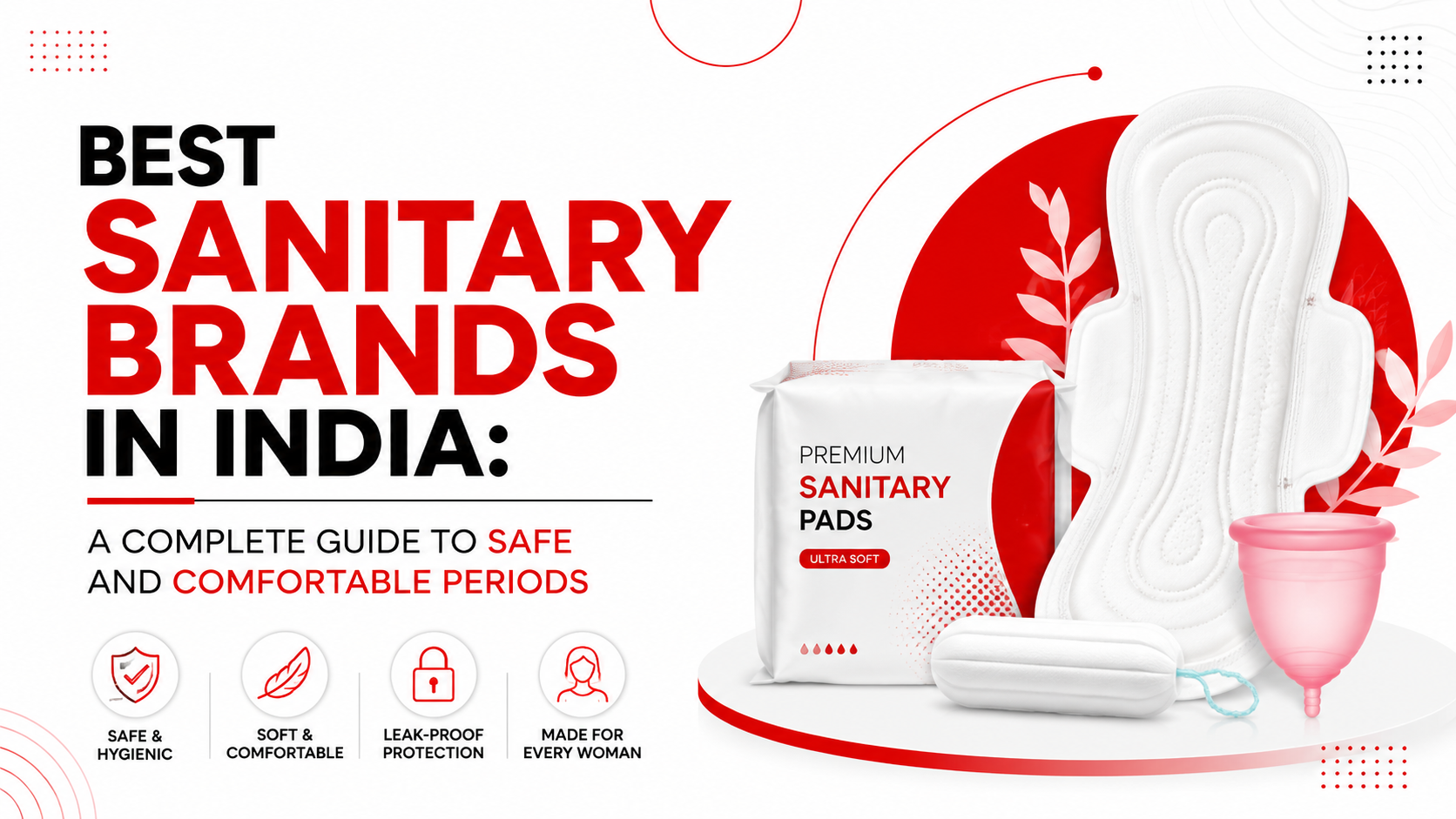
Every month, hundreds of millions of women across India reach for a sanitary pad without ever asking what it is actually made of, how it was tested, or whether a safer option exists on the very same shelf. According to industry estimates, the Indian sanitary napkin market was valued at close to 894 million US dollars in 2025 and is projected to nearly double over the next decade, growing at a steady annual rate of roughly 8 percent. That kind of growth tells a story: more women than ever are buying menstrual products, more brands are competing for their attention, and the choices have become genuinely overwhelming.
If you have ever stood in front of a pharmacy shelf staring at a dozen colourful packets, or scrolled through an e-commerce app comparing prices, absorbency claims, and “organic” labels, you already know the problem. Picking the best sanitary brands in india is no longer a simple decision between two or three familiar names. It now involves comparing materials, certifications, comfort technology, price points, and even the environmental footprint of the product you throw away every few hours.
This guide is written to cut through that noise. We will walk through the most trusted, widely available, and genuinely effective sanitary napkin brands sold in India in 2026, covering both the mainstream giants that most households grew up with and the newer organic and eco-conscious companies that are reshaping the category. By the end, you will have a clear, practical understanding of the best sanitary brands in india and how to pick the one that actually suits your body, your budget, and your values.
What Makes a Brand One of the Best Sanitary Brands in India?
Before naming names, it helps to understand the criteria that separate an average pad from a genuinely good one. The first and most important factor is the material used in the absorbent core and top sheet. Pads made with cotton, bamboo fibre, corn starch, or banana fibre tend to be gentler on skin than those relying purely on synthetic super-absorbent polymers, which can sometimes trap heat and moisture against sensitive areas.
The second factor is absorbency and leak protection, particularly for women with heavy flow or those who need overnight coverage. Brands that invest in research often introduce features such as wider rear sections, gel-locking cores, or multi-layer construction designed to pull moisture away from the skin quickly. The third factor is safety from harmful additives. Many consumers now actively look for products that are free from chlorine bleach, synthetic fragrances, parabens, and dioxins, since repeated exposure to these substances over decades of use is a legitimate health concern.
Finally, affordability, availability, and environmental impact round out the picture. A product that performs brilliantly but is only sold in metro cities or costs significantly more than a family’s monthly hygiene budget cannot realistically be called one of the best sanitary brands in india for the country as a whole. With these benchmarks in mind, let us look at the brands that consistently meet them.
Whisper: A Household Name Among the Best Sanitary Brands in India
Whisper, manufactured by Procter & Gamble, has been part of Indian households since 1989 and remains one of the most recognisable names in feminine hygiene. Its long market presence has allowed the brand to build an extensive distribution network that reaches small towns and rural areas as effectively as metro supermarkets, which is a major reason it continues to dominate shelf space across the country.
The brand’s product range covers nearly every need, from ultra-thin daytime pads to specially designed overnight variants for heavy flow. Whisper’s Ultra Clean and Choice lines use technology aimed at quick absorption and odour control, while its night-use products are built with extra length and width for added security during sleep. This breadth of options is part of why so many comparison lists continue to place Whisper near the top when discussing the best sanitary brands in india.
That said, some users find Whisper’s synthetic top layer less breathable compared to cotton-based alternatives, and a section of buyers have raised concerns over fragrance additives in certain variants. For women without skin sensitivities who prioritise reliable absorbency, wide availability, and a trusted name, Whisper remains a dependable everyday choice, even as newer brands push the category toward more natural materials.
Stayfree and Sofy: Trusted Names from Global Hygiene Giants
Stayfree, owned by JNTL Consumer Health, the consumer healthcare arm spun off from Johnson & Johnson, is another brand that has been part of the Indian market for decades. Its Dri-Weave technology focuses on pulling moisture quickly into the core of the pad, leaving the surface feeling drier for longer. Stayfree’s product line includes secure, ultra-thin, and overnight variants, all positioned around the idea of dependable, no-fuss protection at an accessible price point.
Sofy, manufactured by the Japanese hygiene company Unicharm, has carved out a strong position by focusing on comfort-driven design rather than just absorbency claims. Its Body Fit technology shapes the pad to follow the natural contours of the body, reducing the bunching and shifting that many women experience with flatter, more rigid pads. Sofy also offers an extensive range of panty liners, which has made it popular among younger users looking for daily freshness products beyond period days.
Both brands benefit from the research budgets and manufacturing scale of large multinational companies, which translates into consistent quality control and wide retail availability, from neighbourhood kirana stores to large supermarket chains. When people search for the best sanitary brands in india that combine global manufacturing standards with local affordability, Stayfree and Sofy are almost always part of that conversation, sitting comfortably alongside Whisper in the mainstream category.
Niine: Affordable Hygiene for Every Indian Woman
Niine was founded in 2018 with a mission that went beyond simply selling pads. The brand built its identity around making menstrual hygiene products affordable and accessible to women in both urban and rural India, areas where cost has historically been one of the biggest barriers to consistent sanitary product use. This social mission has translated into bold awareness campaigns that directly address menstrual stigma, something few legacy brands had attempted on the same scale.
On the product side, Niine offers ultra-thin and super-absorbent pads, including its Naturally Soft range, which uses a three-layered cottony top sheet designed to reduce rashes during heavy flow days. The brand has also extended its rear coverage area to be noticeably wider than standard pads, addressing a common complaint about leakage during sleep. Beyond pads, Niine has expanded into baby care products such as wipes and diapers, leveraging the trust it built in its original category.
What makes Niine particularly relevant to any discussion of the best sanitary brands in india is its pricing strategy combined with genuine product quality. Rather than positioning itself purely as a budget option, the brand has managed to offer a soft, cotton-based feel at price points that compete directly with older synthetic alternatives, making it an increasingly common choice for first-time buyers and price-conscious households alike.
Carmesi, Sirona, and Azah: The Rise of Organic Sanitary Brands in India
Carmesi has built its reputation around herbal and biodegradable materials, using a top sheet derived from corn fibre and an absorbent core made from bamboo fibre. The brand markets itself as chlorine-free, paraben-free, and free from synthetic super-absorbent gels, positioning its pads as a gentler alternative for women who experience irritation with conventional products. Its packaging and disposal bags are also designed to be biodegradable, extending the eco-friendly approach beyond the pad itself.
Sirona has taken a slightly different route, offering both organic cotton pads and natural biodegradable pads made from compressed plant-based materials such as corn, sugarcane, and cassava. The company has also added an herbal bio-enzyme layer to some of its products, aimed specifically at reducing rashes for users with sensitive skin. Sirona’s broader hygiene portfolio, which includes menstrual cups and organic cotton tampons, has helped position it as a brand for women looking to rethink their entire approach to period care.
Azah occupies the premium end of the organic segment, with pads made from a hundred percent organic cotton top sheet and a core that the brand claims absorbs significantly more than average synthetic pads. Azah is explicitly free from artificial fragrances, chlorine, and other irritants, and each pad comes individually sealed in a biodegradable disposal bag. For health-conscious consumers willing to pay a premium for ingredient transparency, Azah has quickly become one of the names that regularly appears when people discuss the best sanitary brands in india for sensitive skin.
Pee Safe, Saathi, and Nua: Eco-Conscious Choices Among the Best Sanitary Brands in India
Pee Safe entered the hygiene space with a broader portfolio of intimate care products and has extended that expertise into biodegradable sanitary pads made from cotton with an FSC-certified bamboo core. The brand emphasises a chemical-free manufacturing process, with pads that are chlorine-free and fragrance-free, aiming to reduce the risk of allergies and infections that can sometimes result from synthetic materials used against sensitive skin for extended periods.
Saathi has taken sustainability even further by building its pads around banana fibre, a material that is both biodegradable and naturally hypoallergenic. The brand’s pads are free from synthetic polymers, bleach, and added toxins, and they are designed to fully compost after disposal, which addresses one of the most persistent environmental concerns associated with conventional sanitary products. This focus on compostability has made Saathi a favourite among environmentally conscious buyers, even if its distribution network is still smaller than that of legacy brands.
Nua differentiates itself through a toxin-free formulation free of chlorine, parabens, and dioxins, paired with a direct-to-consumer subscription model that lets users receive pads on a recurring schedule tailored to their cycle. Each pad is individually wrapped for hygienic handling and disposal. The convenience-driven approach, combined with a genuinely gentle material composition, has earned Nua consistent praise in user reviews and a regular spot on lists ranking the best sanitary brands in india for comfort and skin safety.
Plush, The Woman’s Company, and Other Emerging Players
Plush has positioned itself as a brand that blends affordability with a soft, cotton-like feel, often appearing in comparison guides alongside the larger multinational names. Its product line focuses on everyday comfort rather than heavy specialisation, making it a practical middle-ground option for buyers who want better materials than the cheapest synthetic pads without paying the premium prices charged by some organic brands.
The Woman’s Company has built a broader feminine care ecosystem that includes organic pads alongside menstrual cups, intimate washes, and period-tracking support. Its organic pad range emphasises chemical-free composition and has found a loyal following among younger, digitally savvy consumers who discovered the brand through social media and online wellness communities rather than traditional retail shelves.
Smaller but notable names such as Anandi, known for ultra-low-cost biodegradable pads aimed at rural self-help group distribution, and GoGirl, which focuses on skin-friendly, hypoallergenic napkins with overnight variants, round out a market that has become remarkably diverse. Even regional manufacturers like Wowpad, built around gel-based absorption technology and added anion chips for odour control, show how competitive the space has become. Together, these emerging players demonstrate that the conversation around the best sanitary brands in india is no longer limited to a handful of household names.
Sanitary Napkin Market Trends in India for 2026
The broader market context helps explain why so many new brands have entered this space in recent years. With the Indian sanitary napkin market expected to grow from roughly 894 million US dollars in 2025 toward nearly 1.8 billion US dollars within the next decade, manufacturers have strong financial incentives to innovate and differentiate. A significant share of this growth is being driven by demand for eco-friendly and biodegradable products made from bamboo, corn starch, and organic cotton, reflecting a broader shift in consumer priorities toward sustainability.
Technology is also playing a growing role. Several manufacturers have introduced what the industry calls smart sanitary napkins, featuring embedded anion strips intended to prevent bacterial growth and reduce odour throughout the day. Herbal-scented variants using ingredients such as lavender, chamomile, aloe vera, and mint have also become more common, as brands compete to offer a sense of freshness and confidence alongside basic protection.
On the policy side, government initiatives aimed at improving menstrual hygiene awareness and reducing the cost barrier for sanitary products in both rural and urban areas continue to support overall category growth. Combined with the exemption of sanitary napkins from goods and services tax, which has helped keep prices more stable for consumers, these efforts have made it easier for first-time buyers to access quality products. As distribution expands through digital platforms, pharmacies, and retail partnerships, the pool of brands competing for the title of best sanitary brands in india is only expected to widen further through 2026 and beyond.
How to Choose the Best Sanitary Brand in India for Your Needs
With so many strong options available, the right choice ultimately comes down to your own body and lifestyle rather than any single ranking. Start by being honest about your flow level. If you experience heavy flow, especially overnight, prioritise brands that explicitly market extended-length pads with reinforced absorbent cores, such as Whisper’s night range, Niine’s wider rear coverage, or Stayfree’s overnight variants, regardless of whether they are organic or conventional.
If you have sensitive skin, a history of rashes, or simply prefer to avoid synthetic materials against your body for several hours at a time, organic and biodegradable options from brands like Carmesi, Sirona, Azah, Saathi, Pee Safe, or Nua deserve serious consideration. These brands tend to use cotton, bamboo, or banana fibre cores and avoid chlorine bleach and artificial fragrances, which can make a noticeable difference for women prone to irritation, even if the price per pad is somewhat higher than mainstream alternatives.
Budget and availability remain practical realities for most households. If cost or access to online shopping is a constraint, mainstream brands such as Whisper, Stayfree, Sofy, and Niine remain widely available in local stores at consistent price points. A sensible approach for many women is to try a small pack from two or three brands across categories, mainstream and organic, before committing to a monthly routine, since comfort genuinely varies from person to person even among products with similar marketing claims.
Conclusion: Choosing the Best Sanitary Brands in India in 2026
The Indian sanitary napkin market in 2026 offers more genuine choice than ever before, ranging from the trusted reliability of Whisper, Stayfree, and Sofy to the affordability-driven mission of Niine, and on to the organic, skin-friendly innovations from Carmesi, Sirona, Azah, Pee Safe, Saathi, and Nua. Each of these brands has earned its place through a combination of accessibility, material quality, and a genuine response to what Indian women have been asking for: safer, more comfortable, and more transparent menstrual hygiene products.
There is no single universal answer to which brand is best, because the best sanitary brands in india are the ones that match your flow, your skin, your budget, and your values, whether that means prioritising eco-friendly materials, overnight protection, or simple everyday affordability. What matters most is moving away from blind brand loyalty based purely on habit, and toward informed choices based on what each product is actually made of and how it performs for your body.
At Brand Dunia, we believe that choosing the right sanitary pad starts with understanding your own needs. If this guide has helped you narrow down your options, the next step is simple: select one or two brands that align with your priorities, try a small pack of each, and observe how your body responds over a complete menstrual cycle. Comfort, absorbency, skin-friendliness, and overall confidence should guide your decision. If you found this guide useful, share it with a friend, family member, or colleague who may still be relying on guesswork when it comes to period care. Together, we can help more women across India make informed, confident choices about their menstrual hygiene in 2026 and beyond.